
Can You Become a Millionaire in 2026 by Trading in the Stock Market?
Many beginners enter the stock market with one big dream: “Can I become a millionaire by trading in the Stock Market?” With the rise of social media and constant updates about the stock market today, it often feels like wealth creation is quick and easy. But the reality is very different.
ENGLISHTOP POSTS
भाषा बदलने के लिए यहां क्लिक करें
Many beginners enter the stock market with one big dream: “Can I become a millionaire by trading in the Stock Market?” With the rise of social media and constant updates about the stock market today, it often feels like wealth creation is quick and easy. But the reality is very different.
A short video featuring Indian investor Vijay Kedia gives an important message for new investors: you don’t need huge capital to start, but you do need patience, discipline, and long-term thinking. His advice highlights a key truth: real wealth is created by staying invested, not by chasing fast profits.

Trading vs Investing: The Big Difference
Most people who want to become rich quickly focus on Intraday trading. Intraday trading means buying and selling stocks on the same day to make small profits. While it looks exciting, it comes with a high risk. Market movements depend on news, emotions, global events, and large institutional investors. Even experienced traders face losses.
The stock market can rise sharply one day and fall heavily the next. For example, Nifty and Sensex may show strong growth in the morning, but sudden selling can wipe out gains within minutes. This unpredictability makes trading dangerous for beginners.
On the other hand, investing means putting money into strong companies or funds for long-term growth. This approach allows compounding to work in your favour.
Can Trading Make You a Millionaire in 2026?
Maybe it is possible, but it is not realistic for most beginners. To become a millionaire in such a short period through trading, you would need:
Large starting capital
Deep technical knowledge
Strong emotional control
Years of market experience
Ability to handle repeated losses
Many new traders lose money because they chase tips, trade without a strategy, or panic during market corrections. The stock market rewards patience, not gambling.
Understanding the Risks in Trading
Before entering trading, beginners must understand the risks:
Loss of capital: One wrong trade can wipe out months of savings.
Emotional stress: Fear and greed often lead to bad decisions.
Market volatility: Nifty and Sensex can change direction suddenly.
Leverage risk: Many traders use borrowed money, increasing losses.
No guaranteed returns: Unlike fixed income, trading returns are uncertain.
The Smarter Path: Start with Mutual Funds
If you are new and wondering what is investment, the simplest answer is: Investment is putting money into an asset that grows over time.
For most beginners, the best way to start is through a Mutual Fund Investment. Mutual funds pool money from investors and invest it in stocks, bonds, or other assets, managed by professional fund managers. This makes mutual funds a safer entry point compared to direct trading.
Let me explain this with an example. Mr Kedia confirms in this video that in the first 10 years of his trading journey, he struggled to gain profits and survive. Now, let us assume that a common trader also faces such difficulty and gains almost nothing in his first 10 years. On the other hand, a new Investor enters the market in 2016 and buys the simplest vanilla product of Mutual Funds – a Large-cap mutual fund.
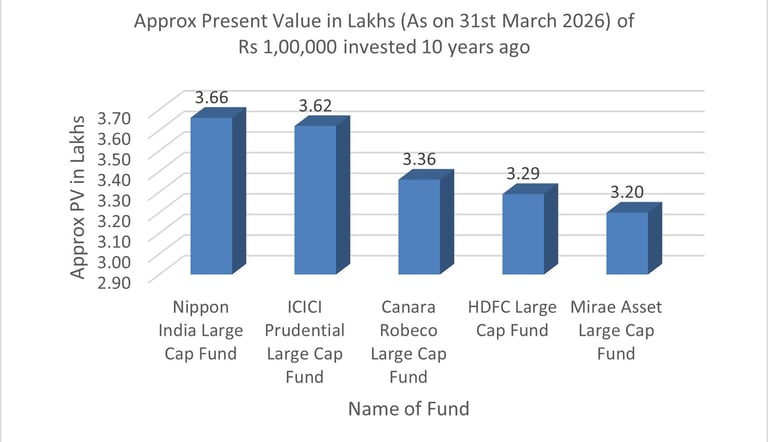
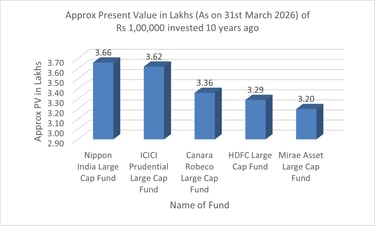
Although returns can't be guaranteed in a Mutual Fund, it may still be concluded that these Mutual Funds grew at a much faster pace without the active involvement of the Investor. Nippon India Large Cap Fund, ICICI Prudential Large Cap Fund, Canara Robeco Large Cap Fund, HDFC Large Cap Fund and Mirae Asset Large Cap Fund all have given more than 3X returns in the last 10 years.
SIP: The Best Strategy for Beginners
A SIP investment (Systematic Investment Plan) allows you to invest a fixed amount every month into a mutual fund. SIP is ideal because:
It builds discipline
It reduces risk through rupee cost averaging
It benefits from compounding over time
It removes the need to time the market
Instead of worrying about the stock market today's movements, SIP investors stay consistent and grow wealth steadily.
Long-Term Investing Creates Real Wealth
Vijay Kedia’s message emphasizes that wealth is built by staying invested. Long-term investing allows your money to grow with the economy. Over time, strong companies expand, profits rise, and stock markets generally move upward.
This is why long-term investors often outperform traders. While traders focus on daily price changes, investors benefit from years of growth.
Role of Mutual Fund Distributors
Many beginners feel confused about choosing funds. This is where Mutual Fund Distributors play an important role. A distributor helps investors:
Select funds based on goals
Choose the right SIP amount
Manage risk properly
Stay invested during market crashes
Distributors act as guides who ensure that investors don’t make emotional decisions that harm long-term wealth creation.
Final Thought
Becoming a millionaire in 2026 through trading may be possible, but risky and unlikely for beginners. A smarter and safer approach is starting with Mutual Funds, building wealth through SIP, and focusing on long-term investing. With the right guidance and discipline, your investment journey can be stable, rewarding, and sustainable.
Disclaimer
Mutual fund investments are subject to market risks. Past performance is not indicative of future returns. This blog is intended solely for education and awareness and should not be treated as investment advice or a recommendation to buy or sell any mutual fund scheme. Investors are advised to read all scheme-related documents carefully and consult a Mutual Fund Distributor before making any investment decisions.